
A Scary Christmas Tradition
Picture this: a snowy Alpine village, festive lights twinkling against the backdrop of a dark December night. Suddenly, the cheerful hum of carolers is drowned out by the clanging of bells and the rhythmic stomping of boots. Out of the shadows lurch horned, furry monsters, wielding birch branches and rattling chains. These aren’t actors in a haunted house—they’re part of an ancient Austrian tradition: the Krampuslauf, or Krampus parade.

For the uninitiated, Krampus parades might seem like Christmas gone wrong, but in Austria and surrounding Alpine regions, they’re as integral to the season as Saint Nicholas himself. Equal parts terrifying and thrilling, these processions celebrate Krampus, the devilish creature who accompanies Saint Nicholas to mete out punishment to naughty children. Here’s a closer look at what makes these parades such a unique spectacle, where to see them, and why they’re worth braving the chill of a December night.
Who is Krampus, and Why Is He So Scary?
Before we dive into the parades, it’s worth unpacking the star of the show. Krampus, whose name comes from the German word krampen (meaning claw), is a demonic figure from Alpine folklore. His roots can be traced back to pre-Christian traditions, where he likely originated as a pagan spirit of winter. When Christianity spread through the region, Krampus was absorbed into Saint Nicholas traditions.
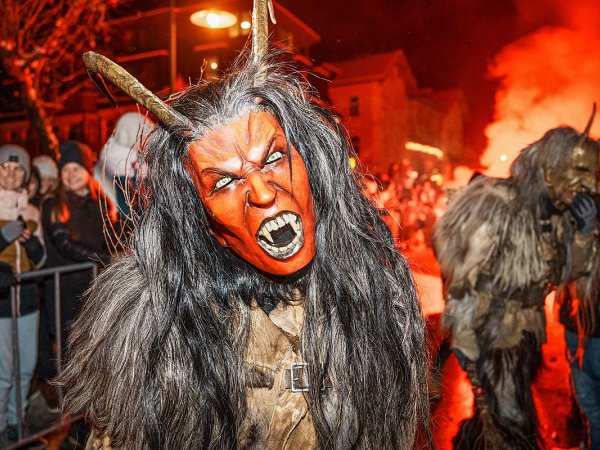
In the lore, Saint Nicholas rewards well-behaved children with gifts on December 6, but Krampus punishes the naughty ones on the preceding night, December 5—Krampusnacht. This punishment ranges from lighthearted scares to the truly macabre: in some tales, Krampus whips misbehaving kids, stuffs them into a sack, and carries them off to his lair.
What Are Krampus Parades?
Krampus parades, known locally as Krampusläufe (literally, “Krampus runs”), bring this folklore to life. In these events, participants dressed as Krampus march through the streets, donning elaborate costumes that can take weeks to prepare. The outfits often feature handmade wooden masks, shaggy fur suits, and enormous horns. Many Krampuses carry traditional props like chains and bells, while some brandish flaming torches for added drama.
The parades are a curious mix of fear and fun. While the Krampuses aim to terrify, they’re also part of a playful cultural celebration. Spectators—both children and adults—line the streets, laughing, screaming, and daring to get close to the monsters. It’s not uncommon for a Krampus to single out someone in the crowd for a gentle scare, waving their birch switch or rattling their chains.
In many towns, Saint Nicholas himself also makes an appearance, creating a juxtaposition of good and evil that perfectly encapsulates the season’s moral lessons.
Where and When Can You See Krampus Parades?
Krampus parades are most commonly found in Austria, particularly in the rural Alpine regions of Tyrol, Salzburg, and Styria. However, neighboring countries like Germany, Italy (South Tyrol), and Slovenia also hold similar events. Here are some of the best places to experience the spectacle:
1. Salzburg
The historic city of Salzburg hosts some of the most famous Krampus parades, with events taking place in the old town and surrounding villages throughout December. The Hellbrunn Advent Market is a particularly atmospheric setting, where Krampuses roam among the festive stalls.
2. Innsbruck (Tyrol)
Innsbruck, nestled in the heart of the Alps, is another hotspot for Krampus parades. The city’s annual Krampuslauf draws hundreds of performers from nearby villages. After the parade, warm up with a steaming mug of Glühwein (mulled wine) from a local Christmas market.
3. Bad Gastein (Salzburg Region)
This picturesque ski resort town combines snow-covered mountains with the thrill of a Krampus parade. The Bad Gastein Krampuslauf is renowned for its dramatic costumes and lively atmosphere, often accompanied by traditional Alpine music.
4. Klagenfurt (Carinthia)
The Krampus parade in Klagenfurt, the capital of Carinthia, is one of Austria’s largest, with over 1,000 participants. Expect a high-energy event with detailed costumes, fire shows, and a healthy dose of chaos.
5. Lienz (East Tyrol)
In Lienz, the Nikolausumzug (Saint Nicholas procession) is followed by a full-fledged Krampus run. This event is steeped in tradition and offers a slightly tamer experience, making it family-friendly without losing its eerie edge.
When to Go
Krampus parades typically occur in early December, with most taking place on or around Krampusnacht (December 5). Some towns and cities host multiple events throughout the month as part of their Christmas festivities. It’s a good idea to check local tourism websites for exact dates and times, as they can vary year to year.
What to Expect at a Krampus Parade

Thrilling Costumes: The artistry of Krampus costumes is breathtaking. Many participants wear handcrafted masks carved from wood and adorned with real animal horns. The fur suits are just as intricate, often made from goat or sheep hides.
Atmosphere: The parades are noisy and energetic, with the constant jingling of bells, rhythmic drumming, and bursts of fire adding to the spectacle.
Audience Interaction: Be prepared for some playful interaction. Krampuses might tap you with their birch switch or pose for a photo—if you’re brave enough to ask.
Family Traditions: Despite their sinister vibe, Krampus parades are family events. Children watch wide-eyed, learning the timeless lesson that bad behavior has consequences.
Why Visit a Krampus Parade?
A Krampus parade isn’t just a holiday event—it’s a deep dive into Austrian culture and folklore. It’s a chance to see centuries-old traditions come alive in the most theatrical way imaginable. The juxtaposition of Krampus and Saint Nicholas captures the duality of the season: light and dark, good and bad, reward and punishment.
Plus, it’s a refreshing antidote to the commercialism of modern Christmas. Where else can you swap saccharine holiday tunes for the thrilling clang of cowbells and demonic roars?So this December, grab your warmest coat, head to the Alps, and experience the wild, weird, and wonderful world of Krampus parades. Just don’t be too naughty—you never know when Krampus might be watching.