
Escobar’s Hippos: The Odd Legacy of Colombia’s Most Infamous Kingpin
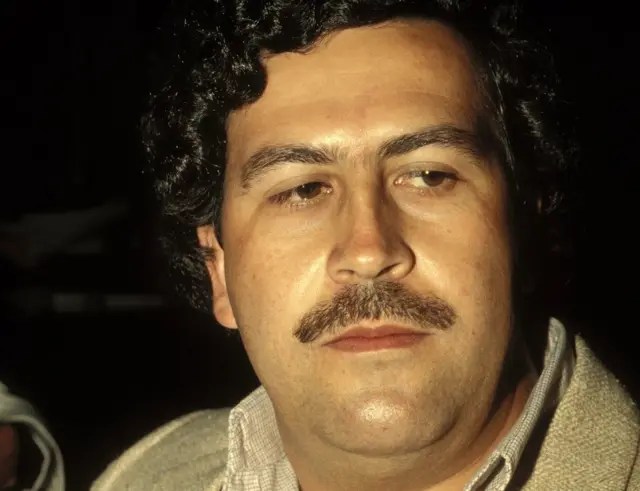
In the annals of South American crime, where real-life villains read like caricatures from a telenovela script, there are gangsters, there are drug lords, and then there’s Pablo Escobar, the man who transformed “narco” from a prefix to a way of life. Escobar, who could barely go a week without flaunting his wealth in some new vulgar way, built a veritable Xanadu in the Colombian jungle. His so-called Hacienda Nápoles wasn’t just a house; it was a fortress wrapped in a theme park, complete with Roman statues, exotic animals, and a zoo fit for a Bond villain.
Of all Escobar’s displays of excess, none would leave such an indelible mark on Colombia as his hippos. Yes, hippos. As if it wasn’t enough to import elephants, giraffes, and kangaroos into the Colombian hinterlands, Escobar went for broke and ordered in four hippos from the savannas of Africa. Why? Because nothing says “I have too much money” quite like deciding you need a private herd of the world’s most dangerous semi-aquatic herbivores.

The Hippo Legacy Begins
After Escobar’s spectacular downfall in 1993, most of his exotic pets were rounded up and shipped off to more sensible settings. But the hippos, left to their own devices and with no natural predators in Colombia, did what animals with infinite food and unchecked jungle territory tend to do: they multiplied. From four hippos, there are now estimates of 150 to 200 of the beasts lolling in the rivers, mucking about in swamps, and frightening fishermen with their ridiculous bulk and surprising speed.
And so the Escobar hippos, hippos that were brought to Colombia for a drug lord’s amusement, are now a burgeoning population, the largest outside of Africa. Some call them an invasive species, a biological nightmare. Others, enchanted by the bizarre image of hippos roaming the Colombian jungle, view them as a “naturalized” species. They’ve adapted with startling ease, filling ecological roles in their adopted land, and some argue they should be left alone to roam their new paradise.
Colombia’s Unexpected Pachyderm Problem
It’s all very funny, this vision of hippopotamuses lounging in Colombia, like some fever dream brought on by too much tequila. Except these hippos are starting to create real problems. They eat up local vegetation, pollute waterways with their generous droppings, and threaten the local wildlife. The rivers, in turn, are filled with a new apex predator—one that weighs over 3,000 pounds and can tear a boat to bits if it feels slightly inconvenienced.
Escobar’s hippos have become a problem that nobody quite knows how to handle. Conservationists argue that the hippos pose a severe ecological risk to Colombia’s native species. Environmentalists fear the creatures will overrun natural waterways, competing with native species for food and space, upsetting the delicate biodiversity of Colombia’s rivers. And for locals, hippo encounters are increasingly dangerous. People who grew up dodging caimans now have to navigate the capricious moods of enormous, ill-tempered mammals that can sprint faster than most humans.
An Operation with Mixed Reviews
The Colombian government has tried various methods to control the hippo population. At first, they attempted humane culling, which was met with an immediate and vehement outcry. It seems that the hippos, despite their lethal potential, have earned the affection of many Colombians, who view them as a part of Escobar’s legend—a legacy that has slipped its criminal roots to become part of the local lore. The Colombian people, who suffered tremendously under Escobar’s reign, have oddly embraced these hippos as a symbol of resilience, maybe even rebirth.
So, the culling stopped, replaced by an attempted sterilization program. Easier said than done. Hippos are as cooperative in surgery as they are on land, which is to say, they aren’t. It turns out that sterilizing a hippo requires teams of veterinarians, massive tranquilizers, helicopters, and a good dose of foolhardy optimism. The cost of sterilizing one hippo runs around $50,000—a small fortune, especially given that there are hundreds of them now lumbering about the Colombian wilderness.
The Strange Allure of the Escobar Hippos
And yet, there is an undeniable charm to these hippos. They’ve become, rather inadvertently, local celebrities. Tourists venture into the Magdalena River Valley, hoping to catch a glimpse of the infamous creatures, now dubbed the “Cocaine Hippos” as if they too are somehow complicit in the sins of their human benefactor.
In fact, the Cocaine Hippos have brought a peculiar kind of tourism to Colombia. People arrive not just to dance in Medellín or stroll through Bogotá’s museums but to see these larger-than-life reminders of Colombia’s past. They represent a sort of ironic attraction, a legacy of Escobar that doesn’t involve bloodshed or terror. People arrive to photograph the hippos, snap selfies, and leave bemused by the surrealism of it all—hippos, in Colombia, all because a drug lord thought they looked good in his garden.

What to Do with Escobar’s Hippos?
The question of what to do with Escobar’s hippos remains unsolved. Conservationists argue for removal, environmentalists for humane population control, and locals seem to have a kind of bemused, if cautious, acceptance. There’s a contingent of people who want to let the hippos live in peace, to simply allow them to fill their strange new niche in Colombian rivers. After all, nature has a way of adapting, and Colombia has been through far worse than a few hundred hippos.
Some scientists even argue that the hippos might not be all bad. They may, in fact, be occupying the niche once held by extinct animals, creatures from a time when megafauna like mastodons and giant sloths roamed South America. The hippos’ behavior, for better or worse, is oddly reminiscent of these ancient animals. They graze, fertilize, and, in some roundabout way, contribute to the ecosystem—though it remains a heated debate whether this contribution is beneficial or disastrous.
A Legacy No One Saw Coming
Escobar’s hippos are absurd, dangerous, and increasingly symbolic. They are a testament to the strange ways in which nature and human folly collide, producing creatures that are both blameless and entirely out of place. Perhaps they’re an accidental parable, a living reminder of what happens when human hubris meets the indifference of nature.
We may never see their kind again—a criminal’s indulgence that left a legacy as wild, unpredictable, and oddly enduring as Escobar himself. Whether they’ll ultimately be reigned in or allowed to roam freely, they’re now as much a part of Colombia as its jungles, rivers, and mountains. The Cocaine Hippos are here, with no intention of leaving, and perhaps that’s just how Escobar would have wanted it.