
When it comes to unusual weather phenomena, most people think of the more common atmospheric spectacles: thunderstorms, tornadoes, or the auroras. But somewhere high above the clouds, a lesser-known yet awe-inspiring phenomenon quietly occurs—sprites. These brief yet striking bursts of light are shrouded in mystery, often described as the “ghosts of the skies.” Here’s why sprites are some of the freakiest sights in the atmosphere and what makes them scientifically intriguing.
What Exactly Are Sprites?
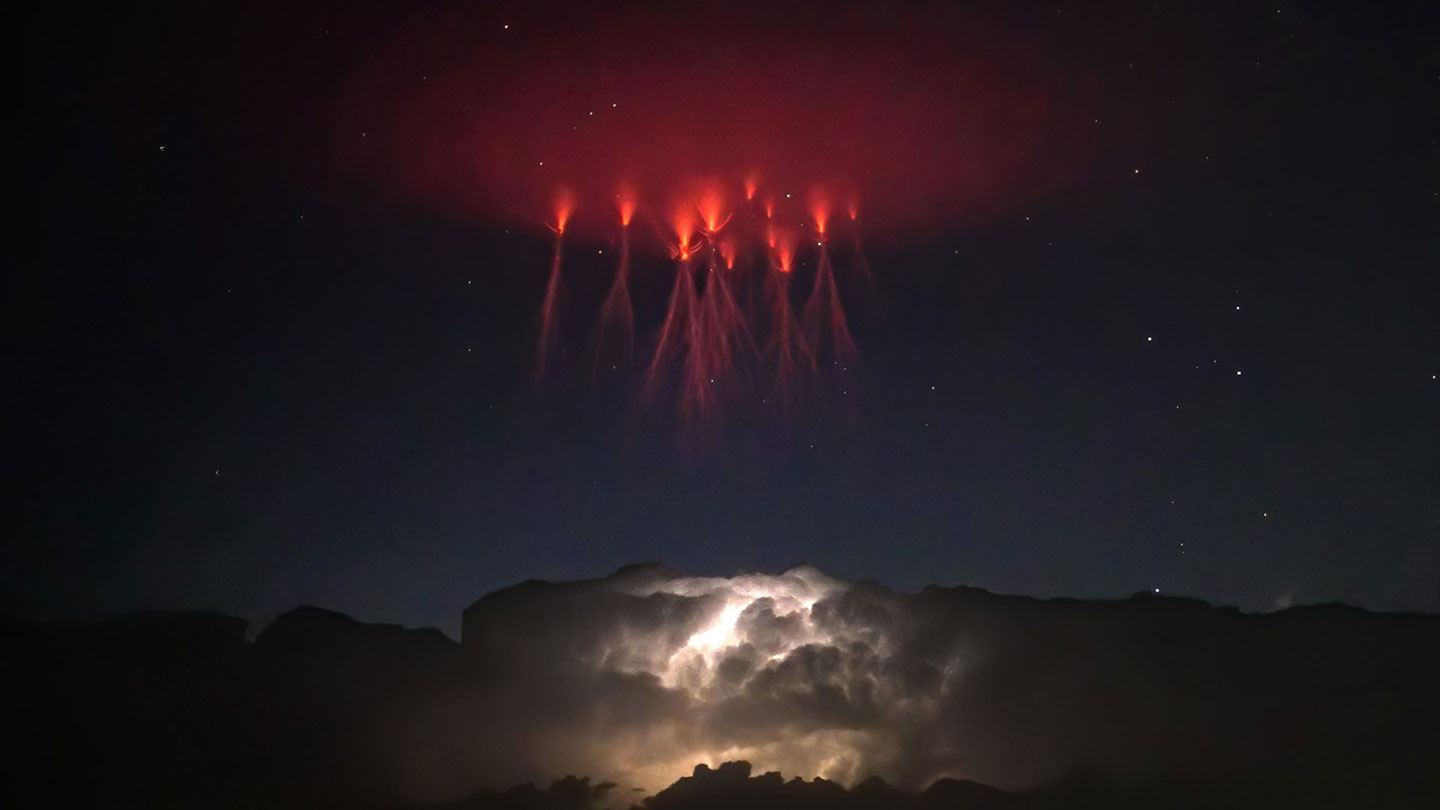
Sprites are large-scale, electrical discharges that occur high above thunderstorms, often around 50-90 kilometers in altitude. Appearing as vivid, sometimes blood-red bursts of light that flicker for mere milliseconds, sprites are shaped like jellyfish or carrots, branching out with long tendrils. Their brevity and altitude make them nearly impossible to spot with the naked eye from ground level, but they have been captured on camera since the early 1990s.
Unlike typical lightning, which occurs within or below storm clouds, sprites are born in the mesosphere, a region well above traditional storm activity. They are thought to be caused by large-scale electric fields generated by lightning strikes below, which create disturbances in the upper atmosphere. When a powerful lightning bolt hits the ground, it can create an imbalance in the electric field above, triggering these bizarre bursts of plasma.
Why Sprites Are So Freaky
1. They’re Practically Invisible
One of the most unsettling things about sprites is that, for the most part, they happen out of sight. Humans had no idea sprites existed until relatively recently. While some pilots occasionally reported seeing mysterious flashes above thunderstorms, scientists didn’t formally acknowledge sprites until they were photographed accidentally in 1989 by a team at the University of Minnesota. This means that sprites were happening for centuries without any real human awareness or understanding. It’s almost as if they were sky spirits hiding in plain sight, doing their thing quietly above the clouds.
2. They Are Exceptionally Elusive
Sprites’ rarity and brevity make them almost ghostly. They last only milliseconds, and often require specialized cameras to capture. This transient quality adds to their mystique, as many scientists have even referred to them as “transient luminous events” (TLEs). To see a sprite, conditions have to be just right: a powerful thunderstorm below, a specific altitude, and enough darkness to make them visible against the night sky. Even then, they only show up sporadically. For the average observer, witnessing one can feel almost magical, as if catching a rare glimpse of something from a fairytale.
3. They Resemble Alien Lifeforms
Sprites’ visual appearances are downright strange. They don’t look like any earthly weather event but rather resemble something from another world. Their shapes can vary from sprite to sprite; some appear like red jellyfish with trailing tendrils, while others look like gigantic red carrot tops with blue-green columns beneath them. This alien appearance, coupled with their incredible altitude, gives them a distinctly otherworldly vibe.
4. Sprites Aren’t Fully Understood
While scientists have been studying sprites for decades, much about them remains mysterious. For example, we know that they’re related to electrical discharges, but we still don’t fully understand the exact conditions that lead to sprite formation, or why they vary in shape and color. Moreover, sprites don’t seem to have a significant impact on weather patterns, leaving scientists wondering what their role is in the larger atmospheric picture.

Why Do Sprites Matter?
Sprites aren’t just fascinating because they’re strange—they’re also scientifically valuable. Studying sprites can offer insights into atmospheric processes that are otherwise challenging to observe. They give us a unique window into the complex dynamics between thunderstorms and the upper atmosphere. Sprites have been shown to produce chemical reactions in the mesosphere, which can affect the composition of that region of the atmosphere. This, in turn, has implications for our understanding of the ozone layer and how energy flows within the atmosphere.
Sprites also help us better understand transient luminous events (TLEs) as a whole. Sprites are one type of TLE; other types include blue jets and elves, each with unique characteristics and formation conditions. Understanding these phenomena can help improve weather forecasting and increase our knowledge of the Earth’s upper atmosphere and its interactions with weather patterns below.
Where Can You See Sprites?
Spotting a sprite with the naked eye is challenging, given their high altitude, brief duration, and rarity. However, certain areas have higher probabilities of sprite activity, including parts of the Midwest United States, where large, powerful thunderstorms are more common. During strong storm seasons, observers with the right equipment—such as highly sensitive cameras—can sometimes capture sprites.
For those truly dedicated to spotting sprites, there are organized observation expeditions, and some scientists even share live feeds during peak storm seasons. Technology like high-speed, low-light cameras has made it easier for sprite hunters and scientists alike to study these brief celestial illuminations.
The Enduring Mystery of Sprites
The allure of sprites goes beyond their scientific intrigue—they remind us of how little we know about our own skies. For centuries, humans looked up and saw only thunderclouds and occasional lightning, completely unaware of the exotic display taking place just beyond our reach. Sprites are a reminder of the vast mysteries of our atmosphere, of phenomena that seem almost magical or paranormal simply because we don’t fully understand them yet.
In a way, sprites are humbling. They remind us that even with all our modern technology and advanced sciences, there are still forces at work above our heads that we’re only beginning to understand. Whether you see sprites as alien-looking plasma bursts or as ghostly flashes in the night sky, they serve as a thrilling reminder of the wonders—and occasional spookiness—of the natural world.